
Some Decisions Change Everything
There's a moment that changes the course of things. For us, it happened in 2021, in a house perched on a hillside in Darjeeling, where the mist rolls in so thick you can barely see your hand in front of you.
Sitting around a table, staring at spreadsheets that told a story nobody wanted to hear. Selim Hill Tea Garden; 370 hectares spread across the scenic Darjeeling slopes, 150 years of history, supporting nearly 350 families from nearby villages, was drowning. The pandemic had hit hard. Export markets were brutal. The numbers didn't lie: it was time to let go.
But here's the thing about legacy - it doesn't show up on balance sheets.
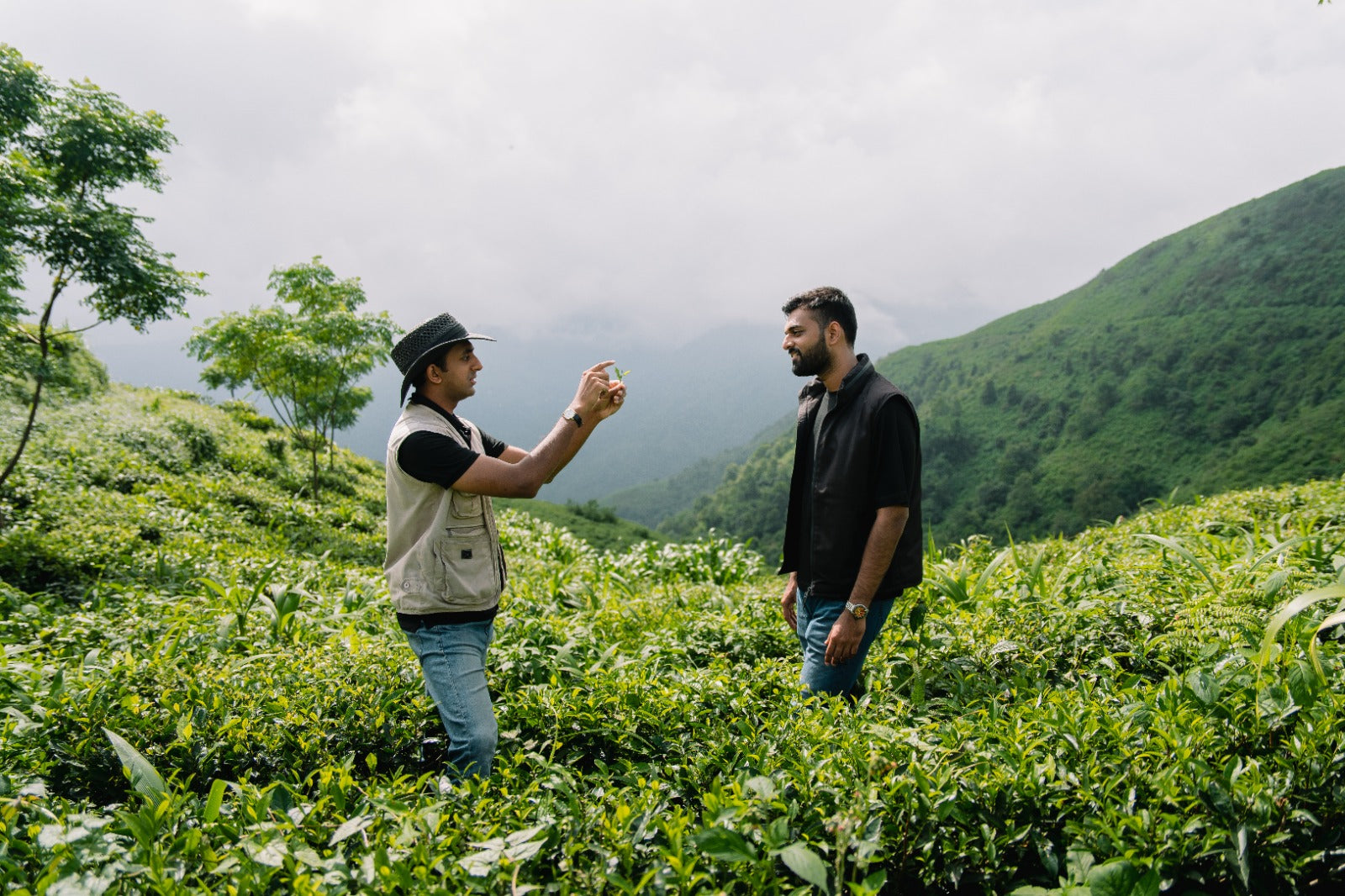
Sparsh and Shrey, two brothers who'd grown up wandering these hills and could tell which season's flush was brewing just by smell, couldn't let that happen. Not without trying. So they made their pitch to the family: Give us one shot. One chance to turn this around.
That conversation became Dorje Teas.

Why ‘Dorje’?
When you're trying to wake something up, you don't whisper. You need thunder.
"Dorje" means exactly that in Tibetan; thunder, the kind that cracks open the sky and announces something powerful is happening. And it felt right, because "Darjeeling" itself means the Land of Thunder. We weren't just reviving a tea garden; we were reclaiming what this place has always been: bold, alive, electric.
The name stuck. The mission did too.
Breaking the Old Rules
Here's what most people don't know about Darjeeling tea: for decades, the best stuff never stayed in India. It got shipped to Europe, Japan, the US, places willing to pay premium prices while Indian consumers were left with whatever didn't make the export cut.
We thought that was backwards.
Why should Indians pay inflated prices for their own heritage tea, filtered through importers and middlemen? Why should "premium Darjeeling" feel like something only fancy hotels serve?
So we flipped the script. We decided to bring estate-direct, genuinely excellent Darjeeling straight to Indian homes, at prices that didn't require a second mortgage. Loose leaf for purists. Pyramid bags for busy mornings. Cold brew for anyone who thought tea had to be hot and fussy.
Same hills. Same care. No gatekeeping.

The Garden That Wouldn't Quit
Selim Hill isn't just where our tea grows; it's where our story lives.
Established in the 1870s by a British planter named Henry Selim, the estate has been part of our family since 1991. Nestled in the Kurseong area at elevations ranging around 3,500 feet, it's a place where the air is crisp and the views stretch across valleys that seem to go on forever.
Of the 370 hectares, about 170 are under tea cultivation, the rest is left for nature; forest cover and biodiversity that we protect fiercely. The estate is organic, home to native birds that nest among the tea bushes, wildlife that moves through the slopes, and over 350 workers who tend these fields with the kind of knowledge that only comes from generations of care.
When we process tea, we do it right here on the estate. That means the first flush you're drinking was plucked, withered, rolled, and packed straight from the dryer's mouth, not shipped halfway around the world before finding its way back home.

Second Chances Deserve a Place
There's a house on the estate we call Second Chance House.
It had many names; the Burra Bungalow, then the Director's quarters, then briefly operated as Selim Hill Resort. Now? It's something harder to define. It's where collaborators stay. Where artists sketch. Where late-night conversations happen over tea and someone's grandmother's recipe gets scribbled on a napkin and pinned to the kitchen wall.
People come, they stay, they leave something behind; a painting, a poem, a new way of thinking about what this place could be. The house became what Dorje Teas is at heart: proof that when you give something a second chance, it becomes magnitudes more than it was before.

What You're Really Drinking
When you open a packet of Dorje, you're not just getting Darjeeling tea. You're getting the choice two brothers made to fight for something that mattered. You're tasting hillsides that have been loved back to life. You're supporting the livelihoods of families across four villages who've poured their lives into these leaves.
And you're saying that India's finest teas don't need to travel the world to prove their worth—they belong right here, in our hands, in our homes.
This is Dorje. Born from thunder. Built on second chances. Growing stronger, one cup at a time.